Sub navigation

Come and visit the Conciergerie on the banks of the River Seine in heart of Paris, the oldest remaining part of the Palais de la Cité, the first royal palace in the French capital that was used as a prison during the French Revolution.
Visiting the Conciergerie
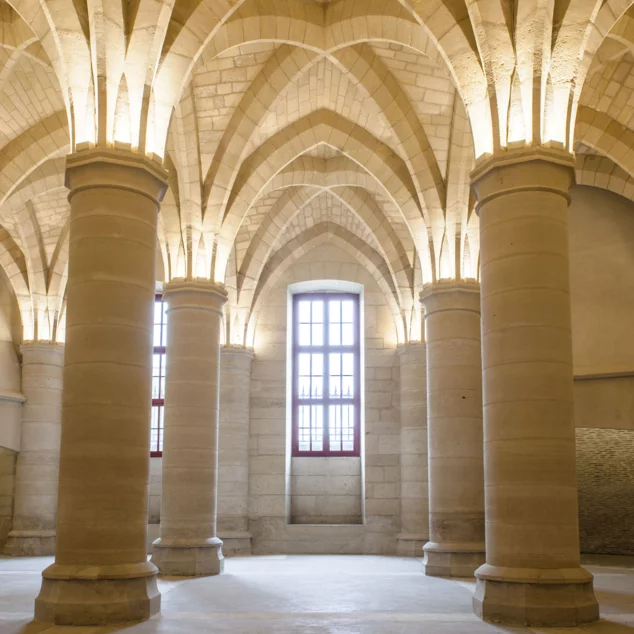
• A splendid Gothic palace. The Guardroom and the vast Hall of Men-at-Arms built in the reign of Philippe the Fair; and the kitchens built under John the Good, date from the Middle Ages.
• A prison during the Reign of Terror. The Kings of France vacated the palace at the end of the 14th century to go and reside in the Louvre and Vincennes. The Conciergerie became a prison. Marie-Antoinette's cell and some of the dungeons have been reconstituted as moving reminders of the Revolutionary period. The commemorative Girondins' Chapel, built in accordance with the wishes of Louis XVIII on the exact spot of Marie-Antoinette's cell, may also be visited, as well as the Women's Courtyard and the ‘Grooming Room'.
Understanding the Conciergerie
• The origin of the name. The Concierge was a high official of the kingdom, appointed by the king to maintain order and oversee the police and prisoner records.
• A seat of power. In the 6th century King Clovis established his royal residence on the Ile-de-la-Cité. Hugues Capet, the first Capetian king, established his council and government here. Saint Louis had the Saint Chapelle (1242-1248), a Flamboyant Gothic masterpiece, built in the heart of the palace.


Download PDF file
French
English
Espanol
Italian
German
Russian
Chinese
Japanese
Polish
abo_rss